Jonesboro Water Damage Cleanup & Restoration
When water is spreading through your Jonesboro home right now, Jonesboro Water Restoration delivers fast, around the clock emergency response across Jonesboro and Grant County. Our IICRC certified crews handle the full job from extraction through reconstruction, and we coordinate directly with your insurance carrier.
If the line is busy, keep your phone close, since we'll call you back within 15 minutes.

Water emergency in Jonesboro? Jonesboro Water Restoration dispatches IICRC certified crews 24/7 for water extraction, flooded basement cleanup, burst pipe response, and complete structural drying, with every step documented for your insurance claim. Call (765) 517-7678.
- Services: water damage restoration, basement flooding, sewage cleanup, storm damage
- Service area: Jonesboro, Grant County, IN and surrounding areas
- Response time: Same day for Jonesboro inquiries; 24/7 emergency service available
- Licensed and insured (License #RC21100059)
- Serving Jonesboro, IN since 2018
Schedule Your Free Damage Assessment
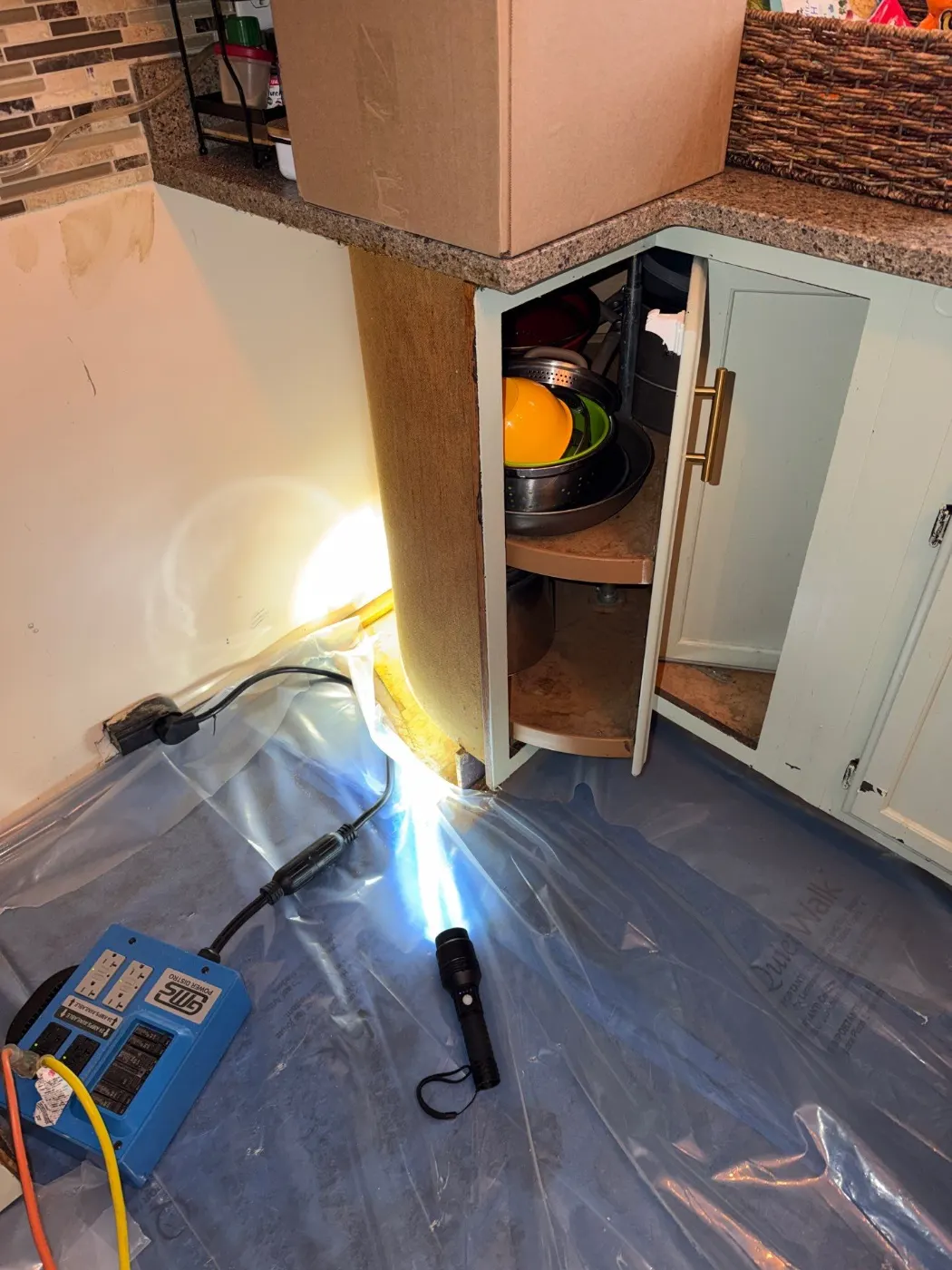
A real inspection in a Jonesboro home is room by room, not a quick walk through. We measure walls with non penetrating meters at multiple heights, check baseboards and trim, pull insulation samples in suspect cavities, look behind cabinets and appliances, under sinks, around water heaters and washing machines, and along basement perimeters and slab joints where water tracks before it shows. Thermal imaging maps temperature differentials that point to hidden moisture, a penetrating moisture meter confirms the readings, and a hygrometer captures ambient conditions in the affected space. The reason we go this deep on every Jonesboro inspection is simple. The most expensive failure in water restoration is the pocket of moisture nobody mapped, the one that fuels mold growth thirty days after the visible damage is gone.
I agree to be contacted by Jonesboro Water Restoration regarding my inquiry.
Water heater failures flood more Jonesboro utility rooms and basements than storms do. Forty or fifty gallons finds every low spot, soaks the drywall behind it, and runs under adjacent flooring. Same day water cleanup keeps a routine appliance failure from turning into a flooring replacement.
Moisture meters and thermal imaging separate real restoration from guesswork. Water travels where Jonesboro homeowners can't see, under flooring, behind baseboards, inside insulation. Mapping it first means the drying plan targets everything wet and nothing that isn't.
When Jonesboro neighbors ask who to call for water damage, the answer that gets passed along is earned in basements and crawl spaces, one saved floor at a time. Referrals built this company, which keeps every job honest.
Payment Options That Work for You
A water loss is rarely a planned expense. Our lender partners offer terms that fit a range of budgets so you can move forward while insurance settles. Ask Jonesboro Water Restoration for current rates.
Pay for your project at a later time, but lock in today's pricing. Ideal for homeowners waiting on insurance settlements.
- No payments for 12 months
- No interest if paid in full
- Lock in current pricing today
Divide your project cost equally across 12 months with zero interest. Most homeowners choose this option for predictable budgeting.
- Equal monthly payments
- 0% interest for 12 months
- Simple, predictable budgeting
Spread your investment over up to 20 years with fixed equal payments. The right choice for larger projects or homeowners who prefer lower monthly amounts.
- Up to 20-year terms available
- Fixed equal payments
- Ideal for larger restoration projects
Subject to credit approval. Ask your project lead for current terms and promotions.
What Jonesboro Homeowners Call Us For
Each service page below explains what the work involves in your Jonesboro home and what to expect from the crew.
Water Damage Restoration in Jonesboro
Full scope water damage restoration for Jonesboro homes, covering extraction, structural drying, antimicrobial application when needed, and reconstruction to pre loss condition. Work is performed to the IICRC S500 standard.
Learn moreBasement Flooding in Jonesboro
Basement flooding response for Jonesboro properties with standing water from foundation seepage, sump failure, broken supply lines, or storm runoff. Extraction, drying, and finished basement reconstruction are handled in sequence.
Learn moreSewage Cleanup in Jonesboro
Serving Jonesboro: category 3 sewage cleanup covering backup events, sewer line failures, and contaminated water intrusion. Containment, biohazard removal, antimicrobial treatment, and affected material replacement are performed under IICRC S500 protocol.
Learn moreStorm Damage in Jonesboro
Storm damage water restoration for Jonesboro homes affected by wind driven rain intrusion, flooding from severe thunderstorm runoff, and structural water damage following severe weather events. Extraction through reconstruction is included.
Learn moreCommercial Water Restoration in Jonesboro
Commercial water damage restoration for Jonesboro businesses, including offices, retail, and mixed use properties along the Main Street corridor and beyond. Work is scheduled around operations where feasible.
Learn moreCommercial Flood Damage Cleanup in Jonesboro
Commercial flood damage cleanup for Jonesboro businesses dealing with large volume water intrusion from storms, broken mains, or rising water. Includes extraction, structural drying, and content management.
Learn moreCommercial Sewage Cleanup in Jonesboro
Commercial sewage cleanup for Jonesboro businesses experiencing Category 3 contamination events. Includes containment, biohazard handling, antimicrobial treatment, and replacement of affected materials per industry standard.
Learn moreCommercial Mold Remediation in Jonesboro
Commercial mold remediation for Jonesboro businesses with active mold growth, performed per IICRC S520. Includes containment, controlled removal, HEPA filtration, and post remediation verification.
Learn moreCommercial Storm Damage in Jonesboro
Commercial storm damage water restoration for Jonesboro businesses affected by severe thunderstorm or wind driven rain events. Covers emergency board up coordination, extraction, drying, and interior reconstruction.
Learn more
Local Expertise, Real Results
Restoration is the only thing we do, and the rigor we bring to every Jonesboro job is what earns the next call.
Restoration is what Jonesboro Water Restoration does, every day, in Jonesboro and across Grant County. Our licensed and insured crew is typically dispatched within 2 hours of your call on active water emergencies, with the moisture detection tools and the IICRC training to handle the work the first time. Free inspection on every emergency call, no obligation, estimate based on what we can see before work begins.
Jonesboro Water Restoration provides water damage restoration in Jonesboro and the surrounding Grant County communities, including Gas City, Marion, Upland, Fairmount, Hartford City, and Matthews. Our service area covers the older single family homes that define Jonesboro's core делать, the ranch properties along the modest street grid, and the commercial buildings along Main Street and the SR-15 corridor. Restoration is the only thing we do, so when a Jonesboro homeowner calls at 2 AM with a burst supply line or a basement filling with storm runoff, the people answering know exactly what comes next. Our crews are IICRC certified, licensed, and insured, and we run every job with experienced technicians leading the work.
Every water damage job in Jonesboro follows the IICRC S500 standard, the industry reference for water restoration, and any mold work we perform is run to the IICRC S520 standard. That means a real moisture assessment before equipment goes in, thermal imaging and meter readings to map where water actually traveled, controlled extraction, and structural drying monitored daily with logged readings. Antimicrobial application happens when contamination warrants it, not by default. Before reconstruction starts, we verify materials have reached dry standard against unaffected baselines. The rigor matters because hidden moisture, not the obvious puddle, is what causes the call back six weeks later.
Our Promise
We make three commitments to every Jonesboro homeowner who calls. First, fast emergency response, day or night, with a crew dispatched as soon as we have your address. Second, IICRC certified technicians trained to the S500 standard, working a documented scope rather than guessing at what needs to come out. Third, a free on site inspection before any work begins, and if you have an active claim, we coordinate with your insurance carrier from the first call through final invoice.
What Jonesboro Homeowners Get With Us
Documented protocols, IICRC certified technicians, and clear scopes from the first inspection through the final walk through on every Jonesboro restoration job.
Fast Emergency Dispatch
Water damage in Jonesboro does not wait for business hours, and neither do we. Our 24/7 emergency line routes your call straight to dispatch, and a certified crew rolls with extraction equipment, dehumidifiers, and meters already loaded. Every hour without extraction expands the affected materials and pushes the project cost higher.
IICRC S500 Trained
Our technicians work to the IICRC S500 standard for water damage and S520 for mold remediation. In practice that means documented Category determination, moisture readings logged daily, and structural drying verified before reconstruction. You get a real protocol, not a rough estimate based on what looks wet.
Mitigation Through Rebuild
Most Jonesboro restoration jobs need more than drying. Drywall, insulation, flooring, paint, and trim all get rebuilt to match what was lost, and we handle that scope ourselves. One company through the full sequence keeps the timeline tight and avoids the gap between dry out and reconstruction.
Insurance Coordination
We work with most major insurance carriers and document the loss the way adjusters expect. Photos before mitigation, written moisture maps, daily readings, and a scope justified per S500 protocol. That paperwork is what gets your Jonesboro claim approved without the back and forth that drags settlements out.
Real Jobs. Real Results.
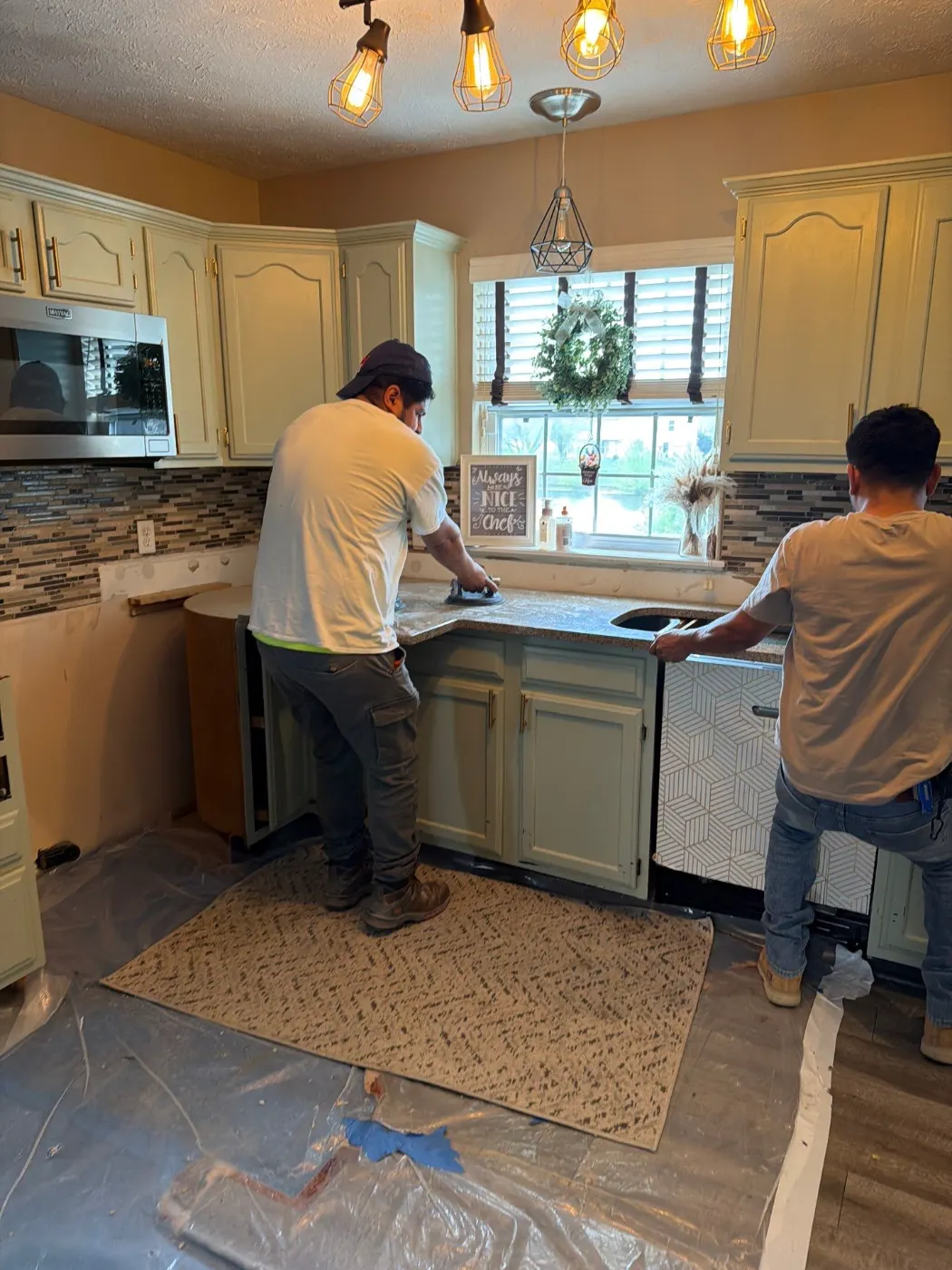
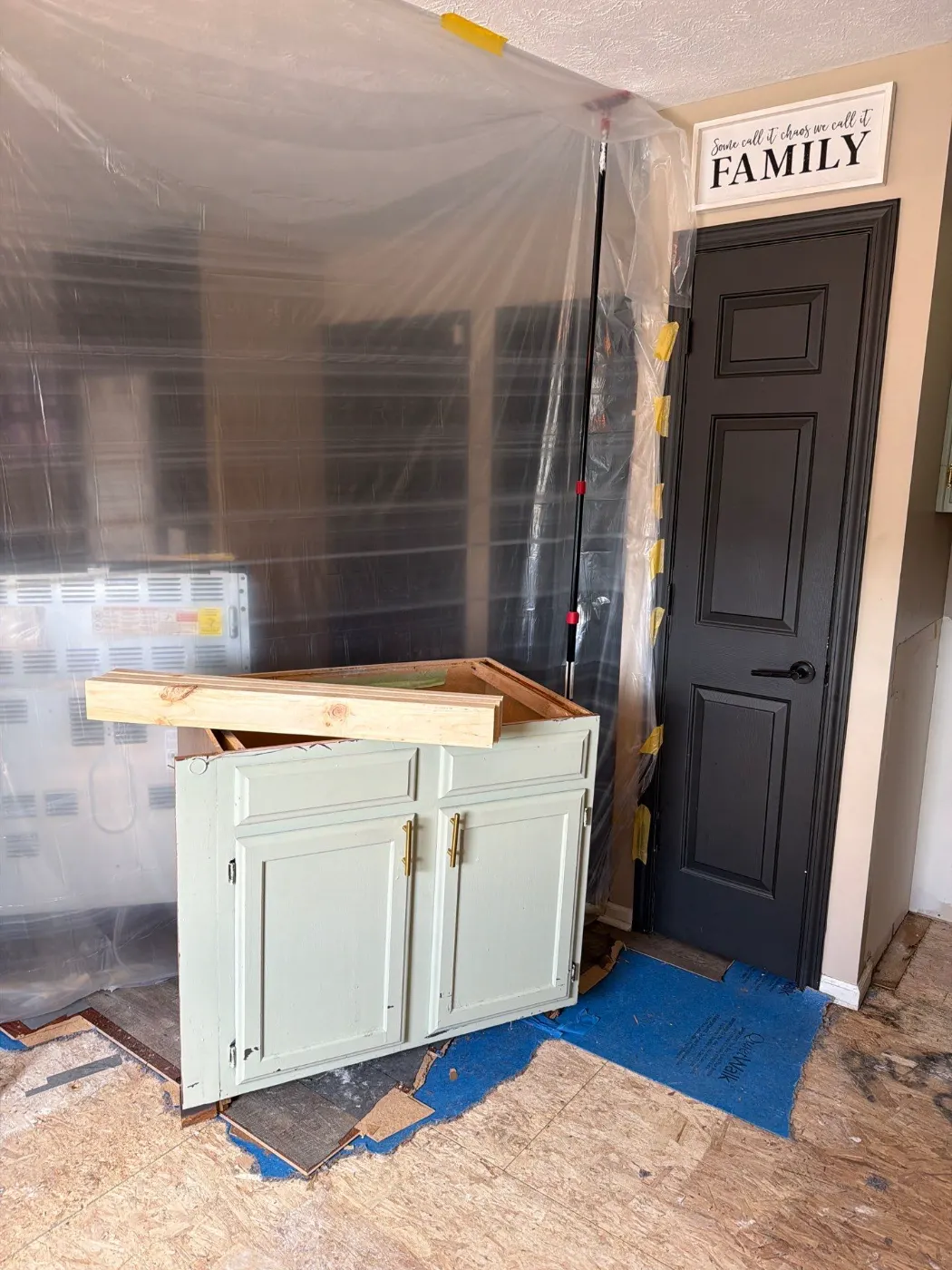
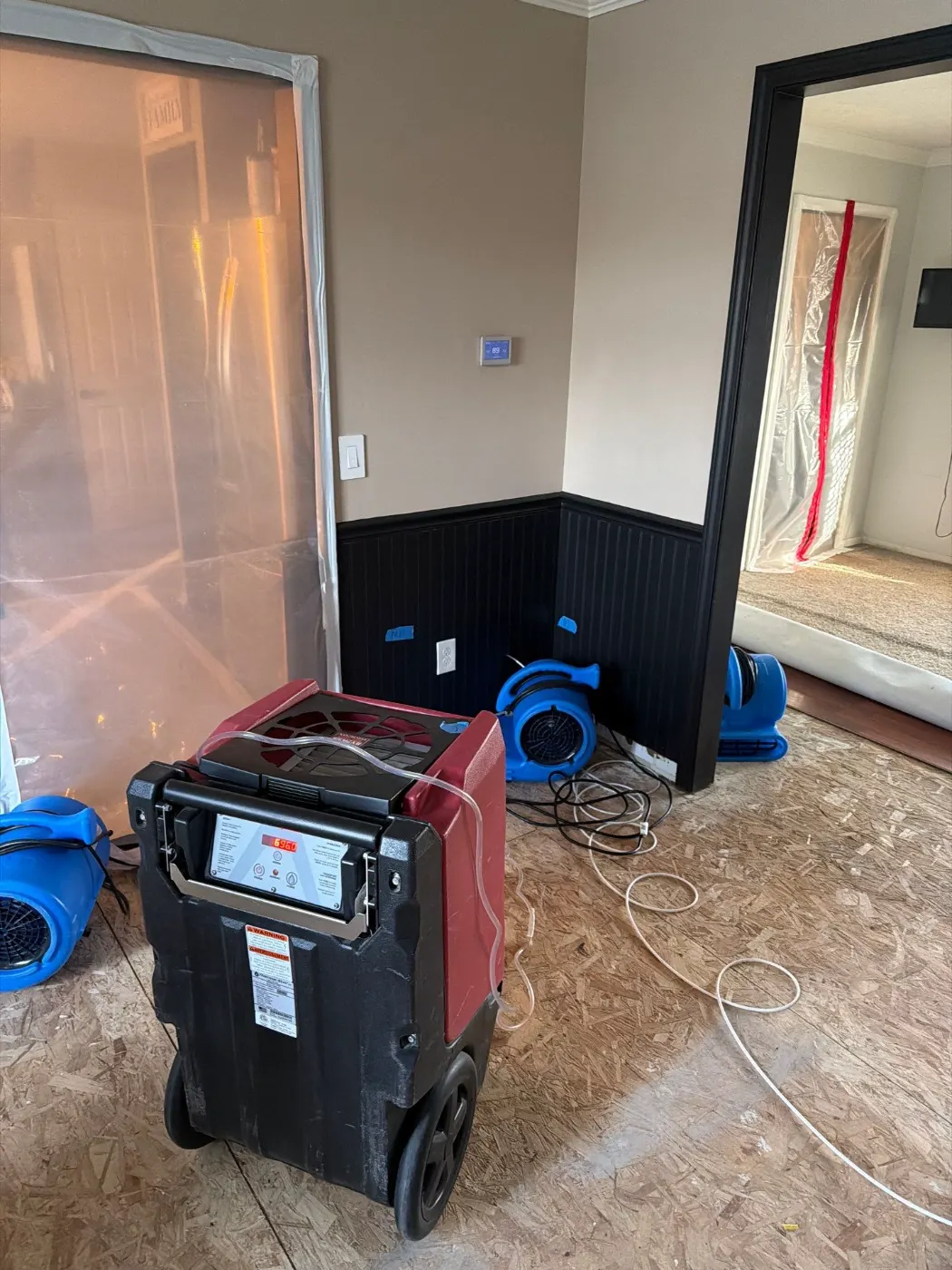
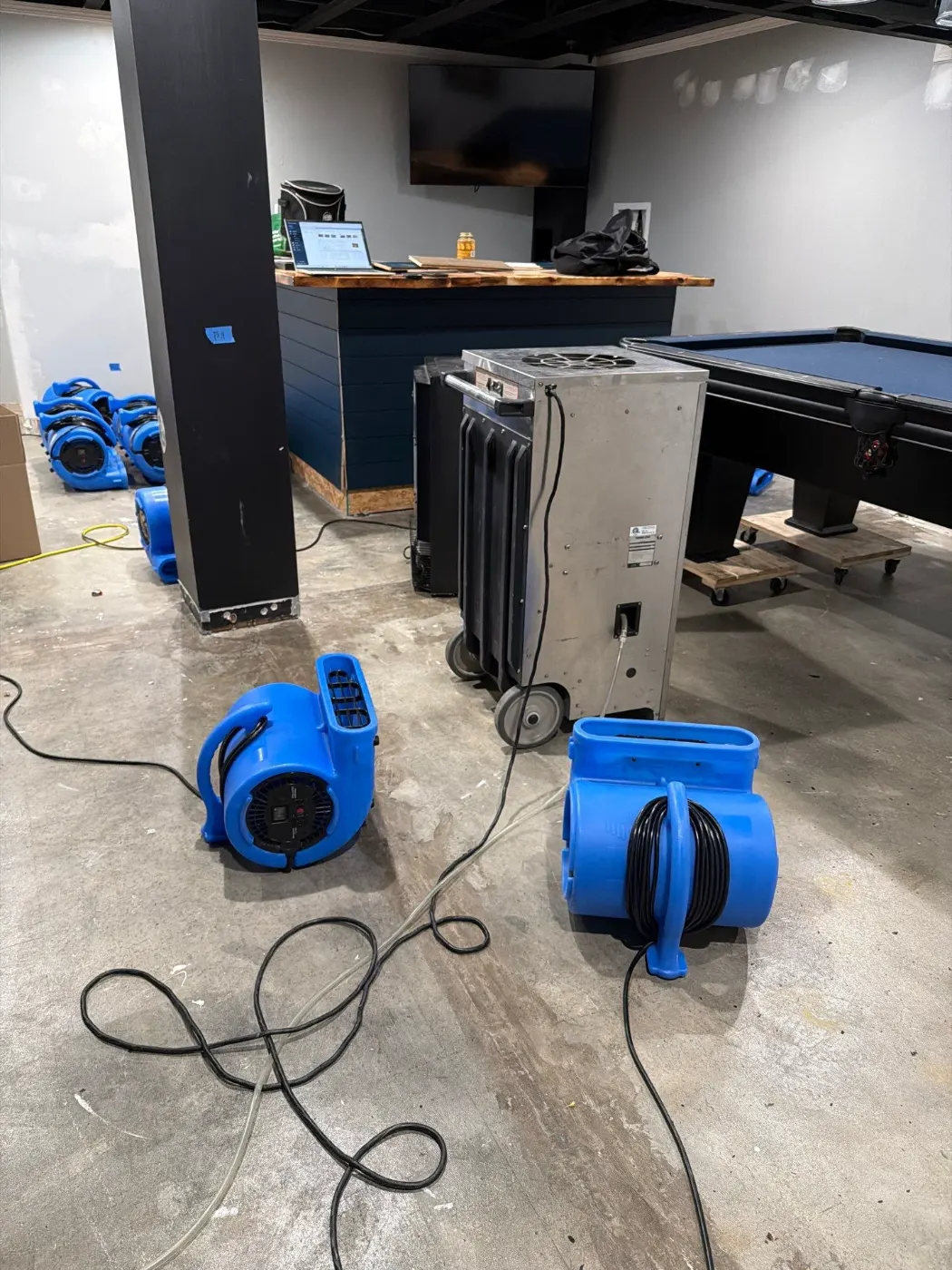
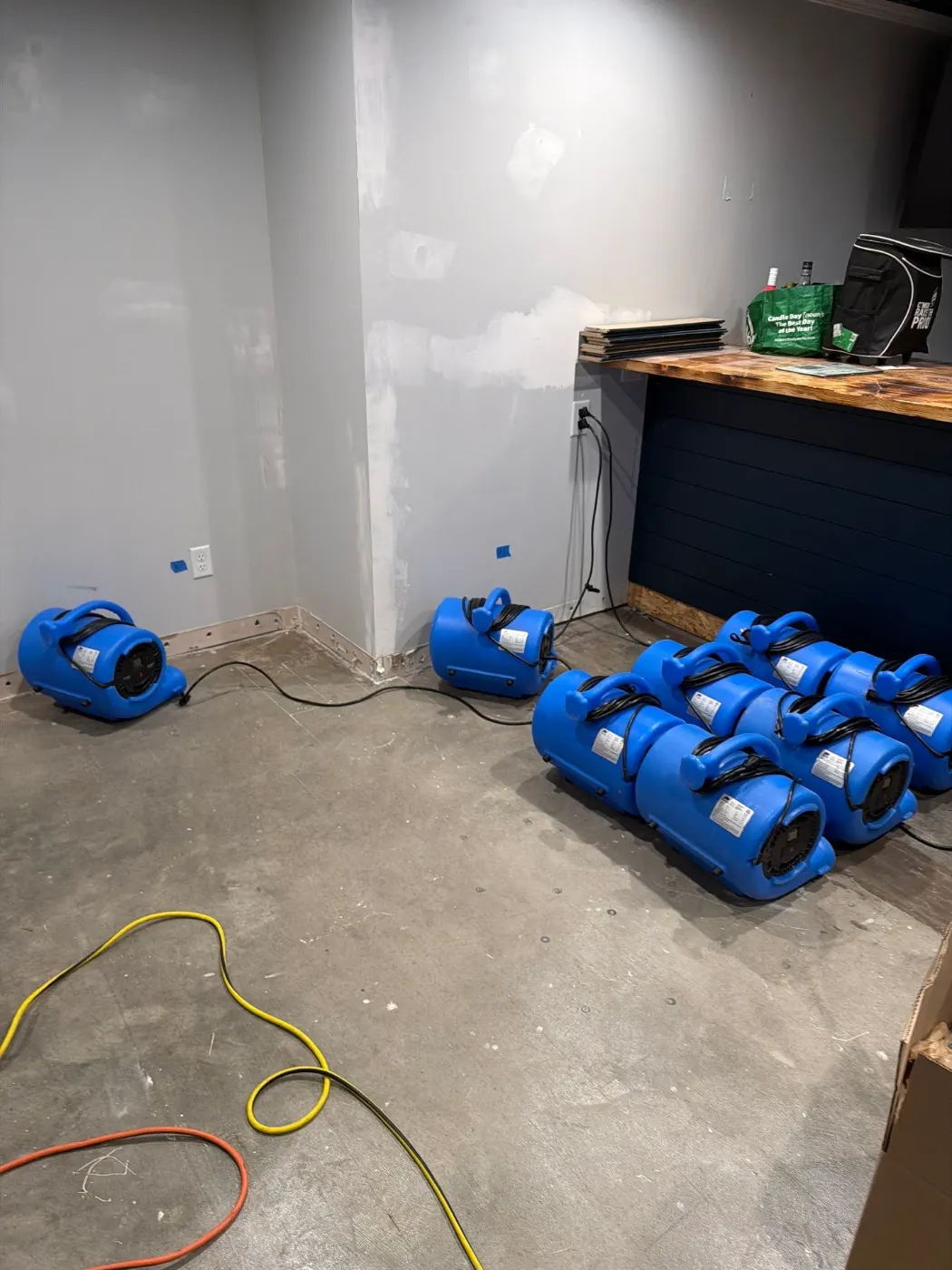
Real water damage restoration projects completed across Jonesboro and Grant County, from basement extractions and sewage cleanups to full reconstruction after storm driven water intrusion.
How a Jonesboro Restoration Comes Together
Every Jonesboro water damage job starts with assessment. A certified technician walks the affected area with thermal imaging and a moisture meter, identifies the source (broken supply line, dishwasher or washer failure, sewer backup, storm intrusion through a compromised envelope, or saturated soil pushing into the basement), and classifies the water as Category 1, 2, or 3 per IICRC S500. The scope of damage gets mapped before a single piece of drying equipment is staged. This phase typically takes one to two hours, and it determines everything that follows.
Before mitigation begins, we photograph and video every affected area, log meter readings on a written moisture map, and open a line of communication with your insurance adjuster. The scope of work is matched to your coverage, and the mitigation steps are justified per industry standard so the carrier sees exactly why each action was necessary. Most Jonesboro homeowners never have to touch this paperwork. We handle the documentation and the adjuster conversations directly, which is usually where claims stall when a homeowner is trying to manage it alone.
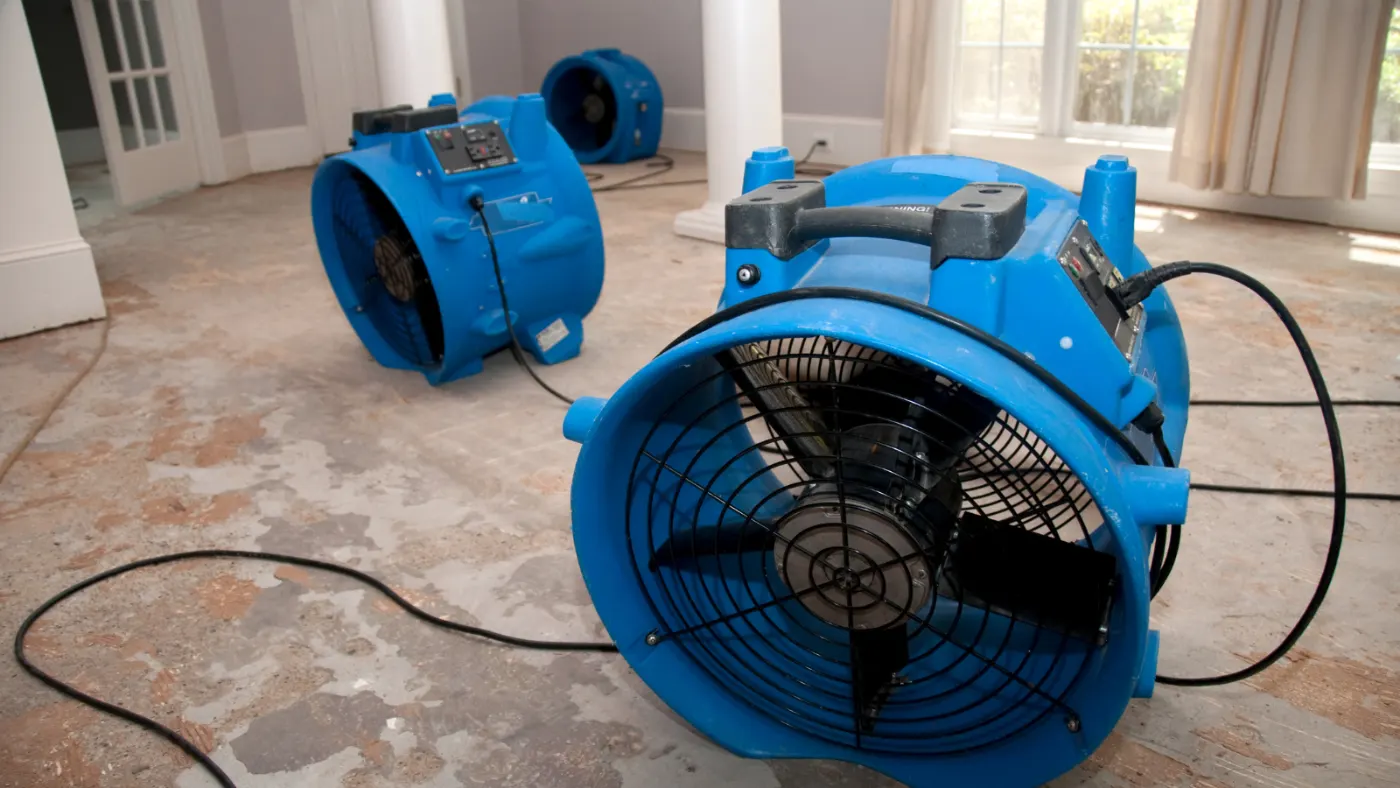
Drying execution follows structural drying calculations. Air movers and dehumidifiers are placed based on the affected square footage and the materials involved, then monitored daily with logged readings until moisture content matches unaffected baseline materials. Controlled demolition happens only where materials cannot be dried in place, such as saturated drywall below the flood line or carpet pad that has wicked Category 2 water. Once dry standard is verified, reconstruction begins: drywall, insulation, flooring, paint, trim, and finish work to return the Jonesboro home to pre loss condition.
Priority Emergency Dispatch
Call comes in, address goes to the nearest available crew, and the truck rolls with extraction equipment, commercial dehumidifiers, air movers, and meters already loaded. A certified technician leads every dispatched crew. Faster on site means less material loss and a shorter overall timeline.
S500 Category Determination
Before equipment is staged in a Jonesboro home, the water gets classified per IICRC S500: Category 1 clean, Category 2 gray, or Category 3 black. Meter readings are logged, a written assessment is built, and the scope is set against the actual contamination level rather than a guess.
Insurance Documentation
We work with your insurance carrier and document the loss to industry standard. Photos before any mitigation, written moisture maps, daily drying readings, and a scope justified line by line. The result is a clean claim file and transparent invoicing.
Verified Dry Standard
Drying is not finished when materials feel dry. We verify moisture content against unaffected baseline readings before reconstruction begins, with daily logged monitoring throughout. That verification is what prevents hidden moisture from fueling mold growth in the months after the job closes.
Water Damage Sources in Jonesboro
Toilet Wax Ring and Flange Failure
Look at the flooring at the base: a lifted edge on vinyl, a dark ring on wood, grout that stays damp. Under it the subfloor and often the joist top have been wet a while, and both get read with a meter before anything is scoped.
Foundation and Groundwater Intrusion
After heavy Grant County rains, groundwater pressure rises around foundations. Jonesboro homes with compromised foundation seals or aging waterproofing see seepage and intrusion into basements.
Fire Sprinkler Discharge
Freeze is the most common accidental discharge we see, usually in an unheated stairwell, attic, or unconditioned storage room. The head splits, the system charges it, and the building takes the flow until somebody closes the valve.
Toilet Supply Line Leaks
A plastic toilet supply line that develops a pinhole leak overnight can produce more water damage than a sudden burst. The slow flow saturates everything around the toilet before anyone notices.
Washing Machine Hose Burst
An overflow during a wash cycle puts detergent water into the structure, which reads as Category 2 under IICRC S500. That changes what gets dried and what gets removed, and it is the reason the water gets classified before equipment goes in.
Ice Dam Meltwater in the Wall
That ice on the gutter is the symptom. The cause is warm air leaking into the attic and melting snow that should have stayed frozen. Removing the dam stops today's water; air sealing the ceiling plane is what stops next winter's.
Found Water in Your Jonesboro Home? What to Do First
Most of what helps in the first hour is simple. Shut off the source and stay clear of anything electrical that got wet, then work through the rest of this list while our crew heads your way.
1. Find your main shutoff
In homes with a basement, the main shutoff is usually on the wall closest to the street. In homes without one, look in a utility closet or near the water heater. Close it and leave it closed until the leak is fixed.
2. Unplug what you can reach safely
If a lamp or a space heater is plugged in near the water and the floor around it is still dry, unplug it and carry it to a dry room. Leave anything that's sitting in water exactly where it is for the crew.
3. Protect yourself first
If you have to step into wet areas, wear rubber boots and gloves. Take the basement stairs slowly if they're wet, and leave the cleanup of any dirty water to the crew.
4. Move what you can't replace
Carry keepsakes and important papers to a dry room upstairs. Then pick up anything sitting on a wet floor, starting with cardboard boxes and anything made of paper, since those soak up water quickly.
5. Pull up rugs and mats
Wet area rugs and bath mats hold water against the floor. Roll them up and move them to a garage or a dry room, and set any furniture that stays behind on foil squares to keep stains off the carpet.
6. Hold off on tearing anything out
Leave soaked drywall and flooring in place until our crew has measured it. Some materials dry where they are, and the readings tell us which ones can stay, so early demolition can mean replacing things that could have been saved.
7. Use the right tools for small spills
Towels and a mop handle a small amount of clean water. For more than that, use a shop vac rated for wet pickup, and keep regular household vacuums away from the water.
8. Call us and describe what you see
When you call, tell us where the water seems to be coming from and which rooms it reached. Those two details help the crew bring the right equipment on the first trip to your Jonesboro home.
After these steps, the next move is a call to our dispatch line so a crew can start extraction at your Jonesboro home.
Three Simple Steps
Every job starts with a phone call and ends with readings that show the house is dry.
Step One: The Call
Speed here decides what gets dried instead of replaced. The equipment list is the same whether the loss is small or whole home.
Find It, Log It
We would rather find it now than explain it later. Every reading is logged with location, material, and moisture content.
Dry, Then Done
Dry standard in 3 to 5 days is typical for Jonesboro, and the readings confirm it. The job ends clean, swept, and walked.
What You'll See in Your Water Damage Photo Report
From the first walkthrough, our crew documents the damage with photos and moisture readings. That record becomes your photo report, and it's how you can see what's happening inside your home from your living room.
What caused it
Finding the cause comes first, because drying a room does little good if water keeps coming in. The report names the cause in plain words and shows it in photos, so you have a record of it later.
How far the water traveled
Water moves under flooring and up into drywall farther than it looks from the doorway. The crew checks walls and floors with moisture meters, and the report marks which areas read wet and which read dry.
Photos of every affected room
The crew photographs each affected room before anything is moved or removed, then again as the work moves along. You'll see the same corner of the same room on the first day and on the last.
What can dry where it is
Some materials can be dried right where they are, and some have to come out. The report shows which is which, with the readings behind each call, so you understand why a section of drywall or flooring is being removed.
Progress you can follow
Each visit adds a new set of readings and photos, so the report shows the drying day by day. If one spot dries slower than the rest, you'll see it in the numbers along with what the crew is changing to fix it.
Seeing it for yourself
The point of the report is that you can see the damage for yourself. We show you the same photos and readings the crew used, and you can ask about any of them before the work goes further.
A record that's yours
Keep the report with your home records. We document damage with a photo report and walk you through what we found, so you can decide with your insurance company. Your policy will say what's covered, so read it before you call them.
Call us when you find water, and the photo report starts on our first visit to your home.
Questions to Ask a Water Damage Company in Jonesboro
Use these questions with any water damage company you call in Jonesboro.
Can I see an itemized estimate?
Ask for every line item in writing. Many insurers price water losses in Xactimate, so an estimate in that format is easier for an adjuster to review.
Does my policy require a certain company?
Ask your adjuster before you sign anything, and read the work authorization so you know what you're agreeing to.
What happens if you find mold?
Ask how mold behind walls or under floors gets handled, and whether that work is priced apart from the drying.
Who handles repairs after drying?
Ask who replaces drywall, flooring, paint and trim once the structure is dry, and whether one company can do both stages.
Who will be working in my home?
Ask whether the crew works for the company you called or for a subcontractor, and who's in charge on site each day.
How will you show me it's dry?
Ask for moisture readings on the first visit and the last one, so you can see the numbers reach dry standard.
Indiana Weather Drives Restoration Calls Year Round
Indiana weather drives most water damage calls in Jonesboro. Spring rain saturates Grant County soil and pushes water through basement foundation walls, summer thunderstorms bring 60+ mph gusts and heavy runoff, and January cold snaps freeze under insulated supply lines until they burst. Each season produces a different failure mode.
Spring Saturation Flooding
Indiana spring rain saturates Grant County soil to capacity, and Jonesboro's older basements, many on partial or full foundations from the pre-WWII era, take the hit. Hydrostatic pressure pushes water through foundation wall cracks, mortar joints, and the cove where wall meets slab. When we arrive, we extract standing water, set commercial dehumidifiers, and dry the affected materials before mold takes hold.
Winter Pipe Bursts
January lows around 16°F drive freeze events that rupture supply lines, particularly in Jonesboro homes with under insulated crawl spaces or exposed rim joists. A burst quarter inch supply line can release hundreds of gallons before anyone notices. Our emergency line is staffed around the clock for exactly this call. We extract, dry, and document while the plumber handles the pipe.
Severe Thunderstorm Runoff
Grant County sits in the path of recurring severe thunderstorm warnings, and the 60+ mph gusts and heavy rain that come with them overwhelm Jonesboro's small town drainage. Wind driven rain finds compromised window seals, door thresholds, and any opening the storm exposed. We respond with extraction, structural drying, and full reconstruction of the affected interior.
Ice Dam Backup
When snow melts off a warm attic and refreezes at the eaves, water backs up under roofing and finds its way into ceilings, exterior walls, and insulation. Stains on a Jonesboro ceiling in February usually point to this. We address the interior water damage, dry the affected cavities, and rebuild ceilings, drywall, and insulation once dry standard is verified.
Jonesboro Neighborhoods We Serve
The Jonesboro neighborhoods we cover, with notes on the homes in each one and where water usually gets in.
Where we respond near Jonesboro
Along with Jonesboro, our crews respond to the closest neighboring communities, 24/7.
What We Have Learned Working in Jonesboro
Why the age and build of a Jonesboro home changes the work.
About Jonesboro Homes
Jonesboro, IN has an exceptionally aged housing stock, with approximately 42.5% of all housing units built before 1940, and only 2.2% constructed after 2000. This pre-WWII construction dominance means many homes were originally plumbed with galvanized iron pipe, with mid century copper upgrades in select properties and virtually no modern PEX installations across the city's core. The housing stock consists primarily of older single family detached homes typical of small Indiana mill towns,predominantly two story and one story frame and brick structures on full or partial basements, which were standard construction practice for this region and era. Ranch style homes on the town's modest street grid also appear, with crawl spaces and full basements common, making below grade water intrusion and basement flooding persistent concerns.
Where We Work in Jonesboro
We cover homeowners across Jonesboro near Jonesboro Public Library (124 East 4th Street), Westview Elementary School (709 W 6th Street), King's Academy (1201 S Water Street), Main Street commercial corridor, 9th Street, SR-15 / 61st Street corridor, Mississinewa River corridor.
Surrounding Areas We Serve
Our crew also covers Gas City, Marion, Upland, Fairmount, Hartford City, Matthews.
Recent Weather Patterns
Grant County, Indiana,where Jonesboro is located,is subject to recurring severe thunderstorm watches and warnings, with the National Weather Service including Jonesboro and surrounding Grant County in multi county severe thunderstorm events producing 60+ mph wind gusts and heavy rain driven flooding. The Grant County Emergency Management Agency identifies flooding as Indiana's number one natural disaster, with urban and small stream flooding, flash flooding from heavy rain events, and spring snowmelt events all cited as recurring hazards affecting local streets, drainage channels, and low lying structures.
What Our Crew Sees in Jonesboro
Jonesboro sits along the Mississinewa River, placing a portion of the community in proximity to riverine flood risk in addition to localized stormwater drainage challenges typical of aging small town Indiana infrastructure. With over 42% of homes built before 1940, the city carries substantial galvanized plumbing risk,galvanized pipes in this age range are well past their serviceable life and prone to interior corrosion, pinhole leaks, and failure, compounding water damage exposure. The town's cold Indiana winters, with average January lows around 16°F and nearly 39 inches of annual precipitation, create real freeze thaw pipe burst risk, particularly in older homes with inadequate insulation in crawl spaces and basement rim joists.
The Jonesboro Area
Jonesboro has a population of approximately 1,500,1,580 residents with a median household income ranging from roughly $41,900 to $48,200 depending on the source, well below both state and national medians. The community skews older (median age ~42), is predominantly owner occupied (approximately 71,78% ownership rate), and has a cost of living index significantly below the U.S. average, reflecting a working class, long tenured homeowner base.
How Jonesboro Water Damage Gets Repaired
Every loss in Jonesboro moves through these three phases in order.
The emergency response phase in Jonesboro starts with what arrives on the truck. Commercial water extraction equipment for standing water, commercial dehumidifiers sized to the affected square footage, professional air movers, moisture meters, and thermal imaging for hidden moisture mapping. Extraction begins as soon as the crew is on site, and structural drying equipment is set the same day with a documented placement plan. Daily monitoring follows, with logged readings tracking progress against dry standard. Inside the home, work zones are contained with plastic, unaffected rooms are protected, and the homeowner gets clear communication on what to expect day by day. Most Category 1 and Category 2 losses in Jonesboro reach dry standard in three to five days, depending on materials and the affected footprint.
Specialized containment is the protocol when the loss involves Category 3 water (sewage backup, floodwater, long stagnant water with biological contamination) or full mold remediation per IICRC S520. We build 6-mil plastic barriers floor to ceiling, seal entry points, and run negative air machines that pull contained air through HEPA filtration before exhausting outside. Technicians work in full PPE: Tyvek suits, N95 or P100 respirators per S520, nitrile gloves, and eye protection. Contaminated materials are cut to a documented line, bagged, and disposed of properly. Antimicrobial is applied to remaining structure, and post remediation verification with air sampling is performed when the situation warrants it. This is the phase where IICRC certification matters most. Cutting corners on Category 3 or mold work is what creates the long term health problems homeowners discover months later.
Reconstruction in a Jonesboro home covers everything that came out during mitigation. Drywall hung, taped, mudded, sanded, primed, and painted to match. Flooring replaced or refinished: carpet and pad, vinyl plank, hardwood refinish, tile reset. Baseboards and trim reinstalled or replaced when damage required removal. Cabinetry repaired or replaced where water reached. Doors rehung, electrical finish work coordinated, and plumbing finish handled in sequence. The homeowner deals with one project from initial call through final walk through, one point of contact for scheduling and updates, and one closing invoice. The alternative most companies offer is a handoff after drying to a separate general contractor, which means two crews, two schedules, and weeks of gap time while the home sits in demolition waiting for the rebuild to start.
Living at Home During a Dry Out in Jonesboro
You can usually stay in your Jonesboro home while the drying equipment runs, as long as it's left running in the spot the crew picked for it. These notes explain what living with it looks like and when it's time for it to come out.
Expect steady noise
Air movers sound like strong box fans, and dehumidifiers add a low hum. A closed door between a bedroom and the equipment helps at night, and the crew can sometimes angle a unit away from a bedroom wall if the noise carries.
Keep everything plugged in
Turning the equipment off slows the drying and can add days to the job. If the noise is a problem at night, call us and the crew will look at the setup with you on their next visit.
Closed doors help
When the crew closes off a room, the equipment dries a smaller space faster. Keep those doors shut as much as you can, and pass through quickly when you need to get in.
Your electric bill
Running several machines for days will raise your electric bill for that month, and that's a normal part of drying a home. The crew removes each unit as soon as the readings say its area is dry.
Plastic walls stay up
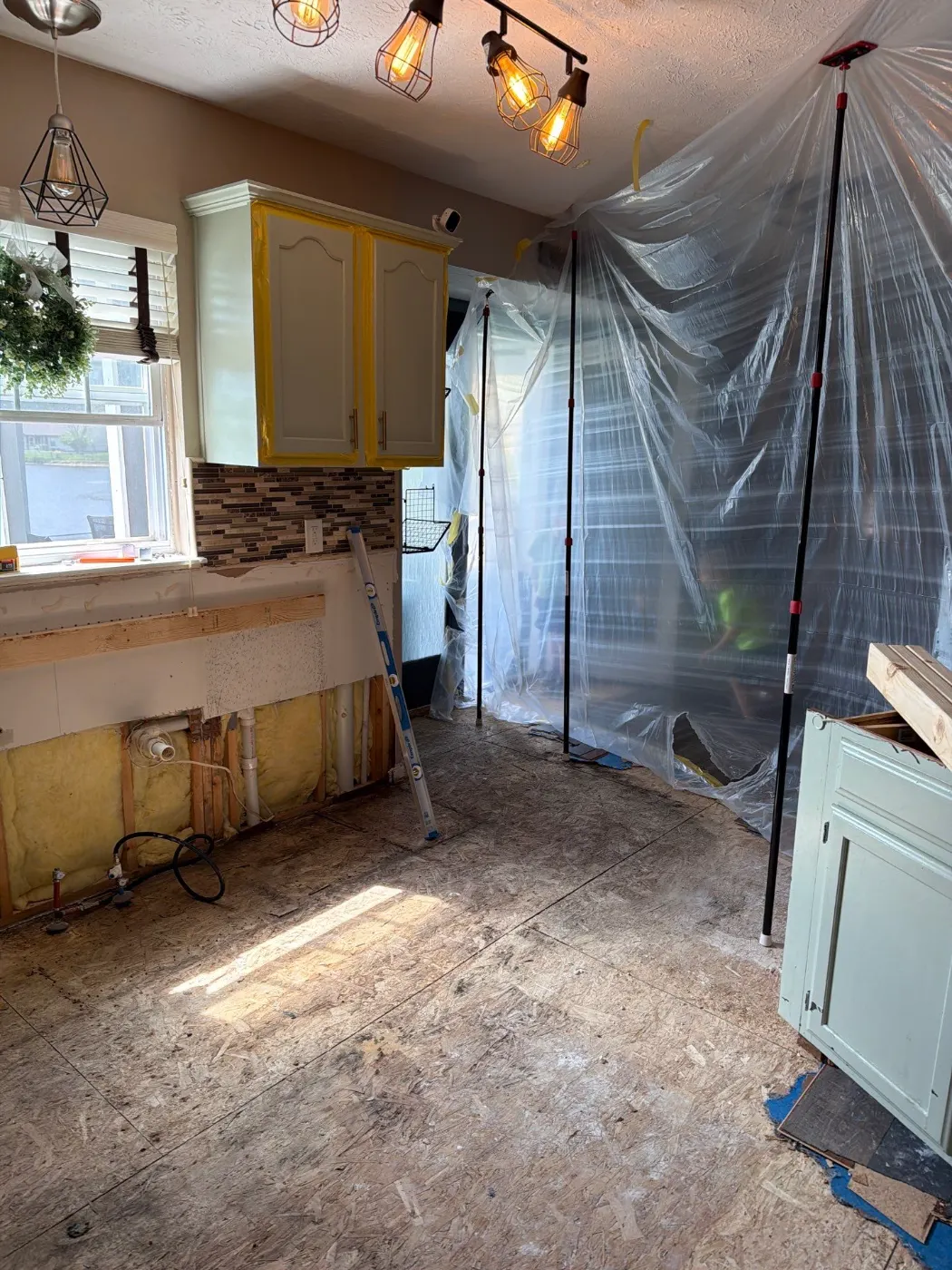
If the crew hangs plastic sheeting to close off part of a room, it's there to keep dust and moisture contained. Leave the zipper doors closed, and keep curious pets from scratching at the plastic.
What the daily check covers
On each visit the crew takes new moisture readings in the same spots as before and moves or removes equipment based on what the numbers show. Those readings go into your photo report, so you can see the change from one day to the next.
Why the drying starts right away
EPA says it's important to dry water damaged areas and items within 24 to 48 hours to prevent mold growth. That's why the crew sets up drying equipment on the first visit and checks it each day after.
Finishing the dry out
Drying wraps up room by room, so some units may leave before others. When the last readings come back dry, the crew removes the rest of the equipment and walks the house with you.
The crew will walk you through the setup on the first day, and you can call us with questions until the last unit leaves your Jonesboro home.
Jonesboro water damage pricing
Mitigation ranges for Jonesboro. Insurance covers most claims.
Jonesboro Water Restoration is powered by Indy Roof & Restoration
When you call, Indy Roof & Restoration answers and sends a crew. Indy Roof & Restoration has worked central Indiana storm seasons since 2018, and Jonesboro is part of that service area. Homeowners have left Indy Roof & Restoration 2,380+ Google reviews.
Licensed and insured · License #RC21100059
That work is backed by BBB A+ Rated · Owens Corning Preferred Contractor · Malarkey Certified Contractor. Their work has drawn coverage from FOX59, WISH TV, and RTV6. Recent community work includes Habitat for Humanity, Toys for Tots, the annual school supply backpack drive, and local youth sports and school programs across central Indiana.
FAQ · Jonesboro Water Damage
Quick answers for Jonesboro homeowners who just found water on a floor or coming through a ceiling.
Expert Jonesboro Restoration Crews Available Now
If water is spreading through your Jonesboro home right now, or you suspect hidden moisture from a recent storm or pipe failure, call our 24/7 emergency line for fast dispatch. Free on site inspection, no obligation, and we coordinate directly with your insurance carrier from the first call.