Commercial Mold Remediation in Jonesboro, IN
Commercial mold remediation across Jonesboro and Grant County. Moisture mapping, material removal, independent verification where it's required.
Need Commercial Mold Remediation in Jonesboro? Jonesboro Water Restoration schedules certified assessments, delivers written scopes before any work starts, and coordinates with your insurance carrier on approved claims. Call (765) 517-7678.
- Service: Commercial Mold Remediation for Jonesboro homeowners
- Service area: Jonesboro, IN and surrounding areas
- Response time: Scheduled evaluation at your convenience, typically same week
- Licensed and insured (License #RC21100059)
- Serving Jonesboro, IN since 2018
Commercial Mold Removal in Jonesboro
We'll find the moisture behind mold growth in commercial buildings across Jonesboro and remove the growth inside containment.
Moisture Sources Here
Buildings near the Mississinewa River can take on floodwater, and anything left wet afterward can grow mold. We'll go over the air handling and any past leaks on the first walkthrough with whoever runs the building.
We take commercial mold jobs anywhere in Jonesboro, including the streets around the Main Street commercial corridor. We also handle commercial mold work in Marion, Gas City, Matthews and Hartford City.
Commercial Mold Remediation for Jonesboro Businesses
Several complaints from one corridor in the same week is a pattern worth taking seriously. Shared plenums, common wall cavities and a single roof drain can put the same moisture problem behind four different suites. Jonesboro Water Restoration investigates across the whole affected area on Jonesboro commercial properties and treats the complaints as one problem, because remediating one suite while the water keeps feeding the next one wastes the money you spent.
The way crews leave the work area matters as much as how they build it. In your Jonesboro building, Jonesboro Water Restoration sets up a decontamination entry where people vacuum their gear and bag disposable items before stepping into the corridor. Carts and ladders get HEPA vacuumed and wiped before they travel anywhere else in the building.
Reconstruction picks up where the remediation stops. Once the drying readings hold and verification is complete, the Jonesboro Water Restoration crew rebuilds what came out: framing repairs, insulation, gypsum board, ceiling grid and tile, flooring, paint and trim. The drying readings travel with the rebuild, so there's a record showing each cavity was dry when it got closed.
Third party testing costs are part of the claim file too. When an industrial hygienist writes the protocol or performs post remediation verification, those invoices and reports go into the documentation Jonesboro Water Restoration keeps alongside the remediation records. Carriers tend to give more weight to a clearance decision made by somebody with no financial interest in the removal scope, which is one reason that separation is worth keeping even when nobody has required it.
Growth behind a wall assembly doesn't resolve on its own, and the moisture that caused it keeps arriving until somebody corrects it. Call Jonesboro Water Restoration to get the affected area mapped and scoped. Crews come to commercial properties in Jonesboro on a scheduled visit with moisture meters, thermal imaging and containment materials on the truck.
Signs You Need Commercial Mold Remediation
If you notice any of these in your Jonesboro building, schedule a free inspection before the issue worsens.
Spotting around a supply diffuser or discoloration radiating outward across the ceiling tile
Interior paint blistering or peeling on a wall that backs onto a restroom or janitor closet
Vinyl wall covering bubbling or peeling at the seams, usually worst near the base
A room that was dried out after a leak but still smells damp weeks later
Swollen base trim or gypsum board that's gone soft at the floor line in a restroom chase
Standing water sitting in a condensate pan that should have drained hours ago
Staining that reappears in the same ceiling location after the roof was already repaired
An inspection report from a buyer's consultant that recommends remediation of one named area
Loading dock leveler pits that collect water beside an office or break room wall
Ceiling tiles with staining on the back side that only shows when you lift one out of the grid
How Jonesboro Water Restoration Handles Commercial Mold Remediation
We follow these steps in order on every Jonesboro job.
Inspection and Moisture Survey
Crews walk the affected area with thermal imaging and penetrating moisture meters, lift ceiling tiles where readings justify it, and open small inspection ports in wall assemblies. The survey defines the real boundary of the growth and identifies where the water is arriving from.
Written Scope and Approval
The Jonesboro Water Restoration team puts the findings in writing: containment boundary, which assemblies come out, which get cleaned in place, and the moisture source that has to be corrected. The building owner or property manager approves it before any material is disturbed.
Negative Pressure Setup
HEPA filtered negative air machines pull the work area to negative pressure relative to the surrounding building, exhausting outside where the layout allows. Manometers confirm the differential across the barrier. HEPA air scrubbers run inside the enclosure for particulate throughout the project.
HVAC Isolation
The crew coordinates with the building engineer to shut down or rebalance the affected air handler and seals its registers inside containment. Growth inside the unit or on duct insulation gets flagged for your HVAC contractor, and that work gets scoped separately.
Affected Material Removal
Porous material with growth in it comes out: saturated batt insulation, affected gypsum board and ceiling tile. Crews mist material before cutting, bag it inside containment, wipe the bags down, and carry them out through the decontamination entry on an agreed route.
Commercial Mold Remediation in Jonesboro
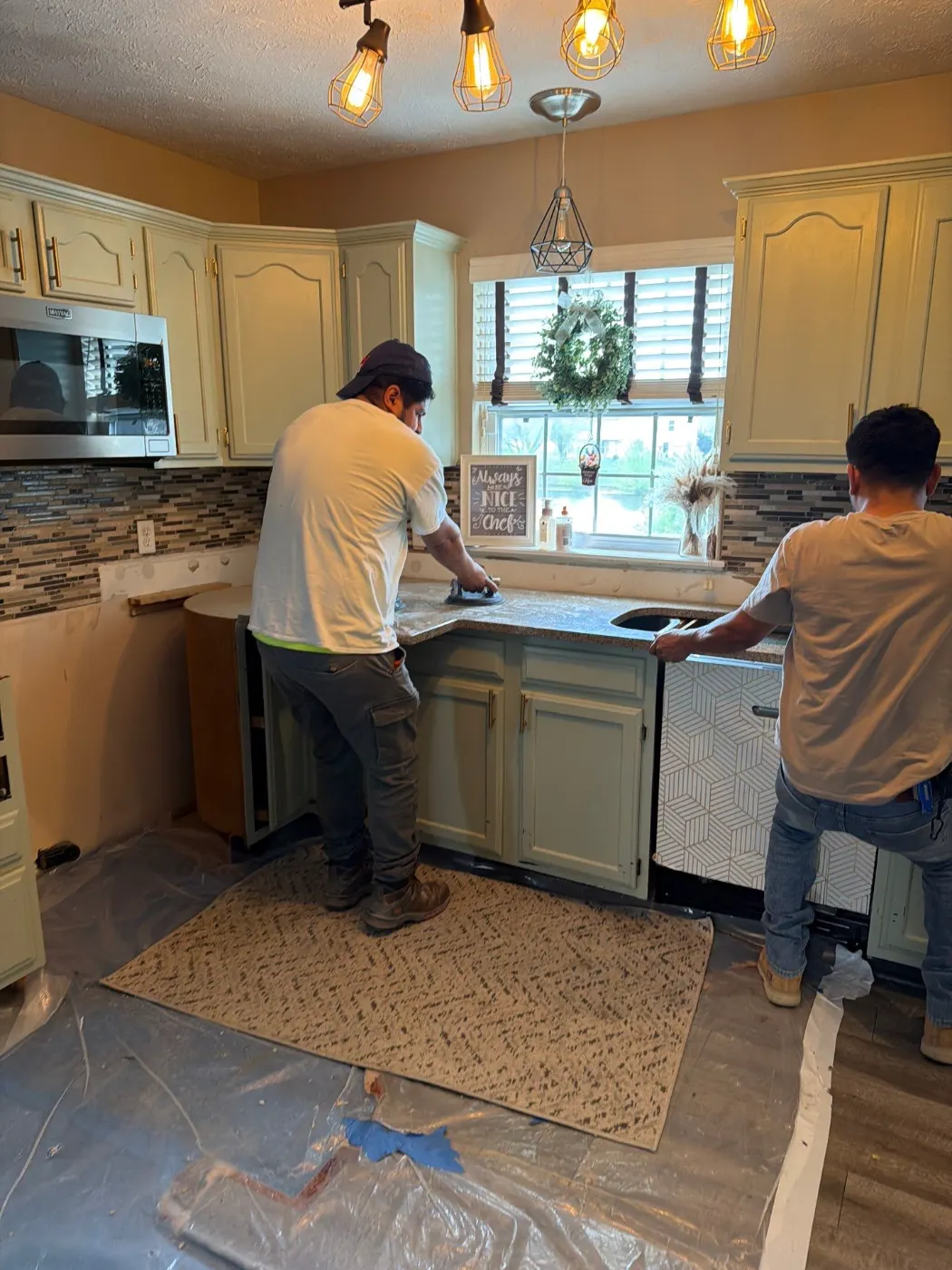
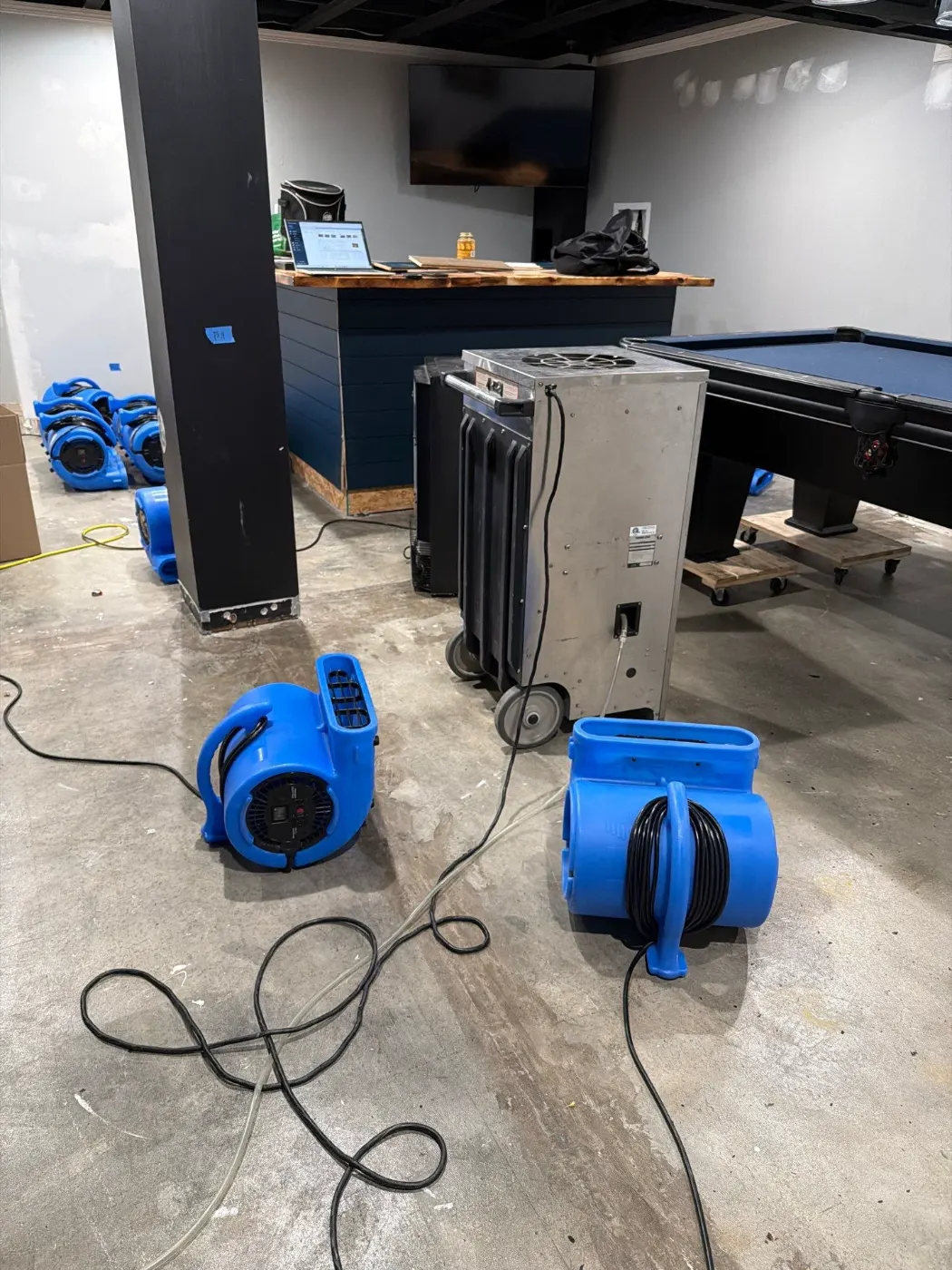
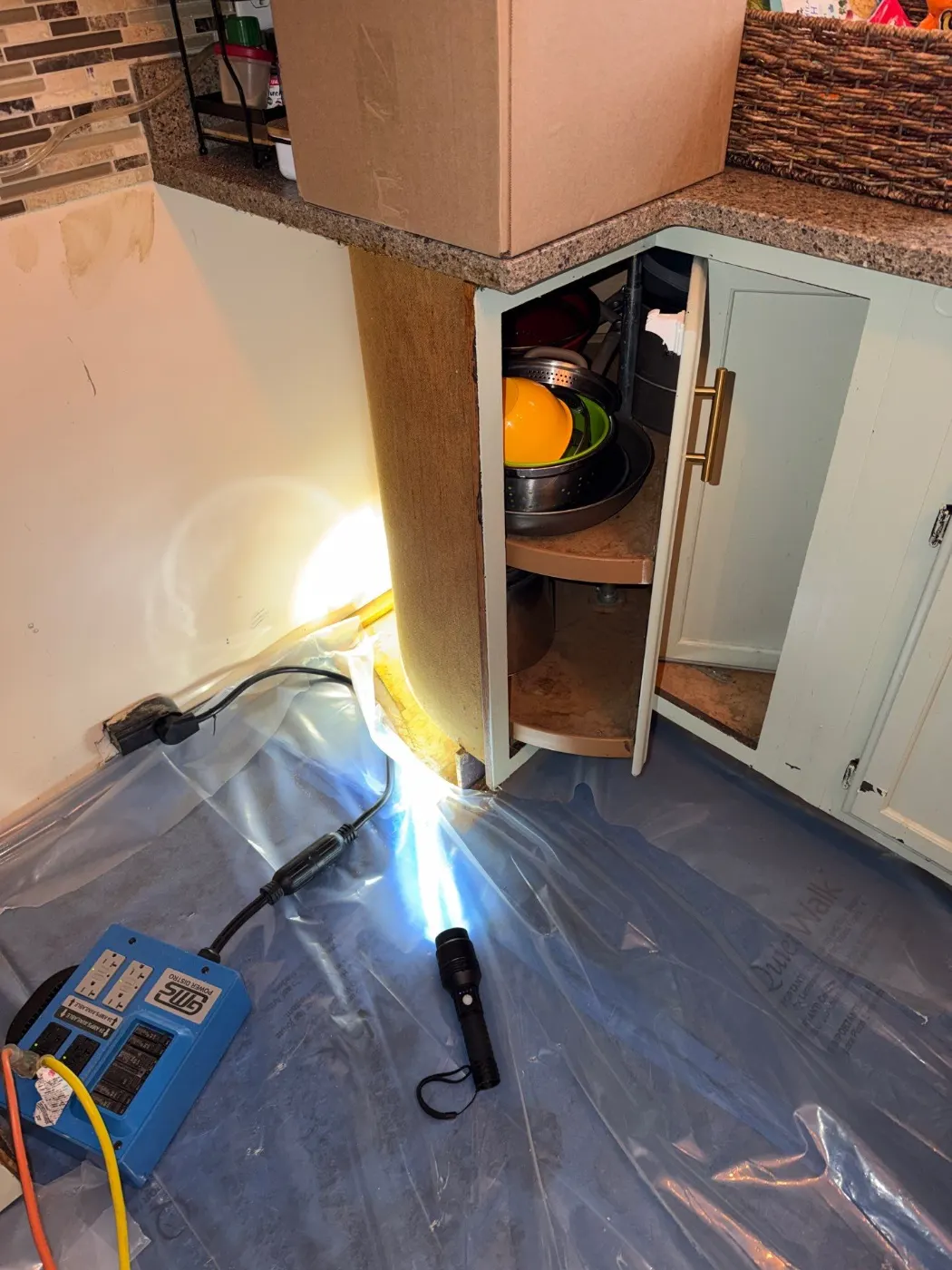
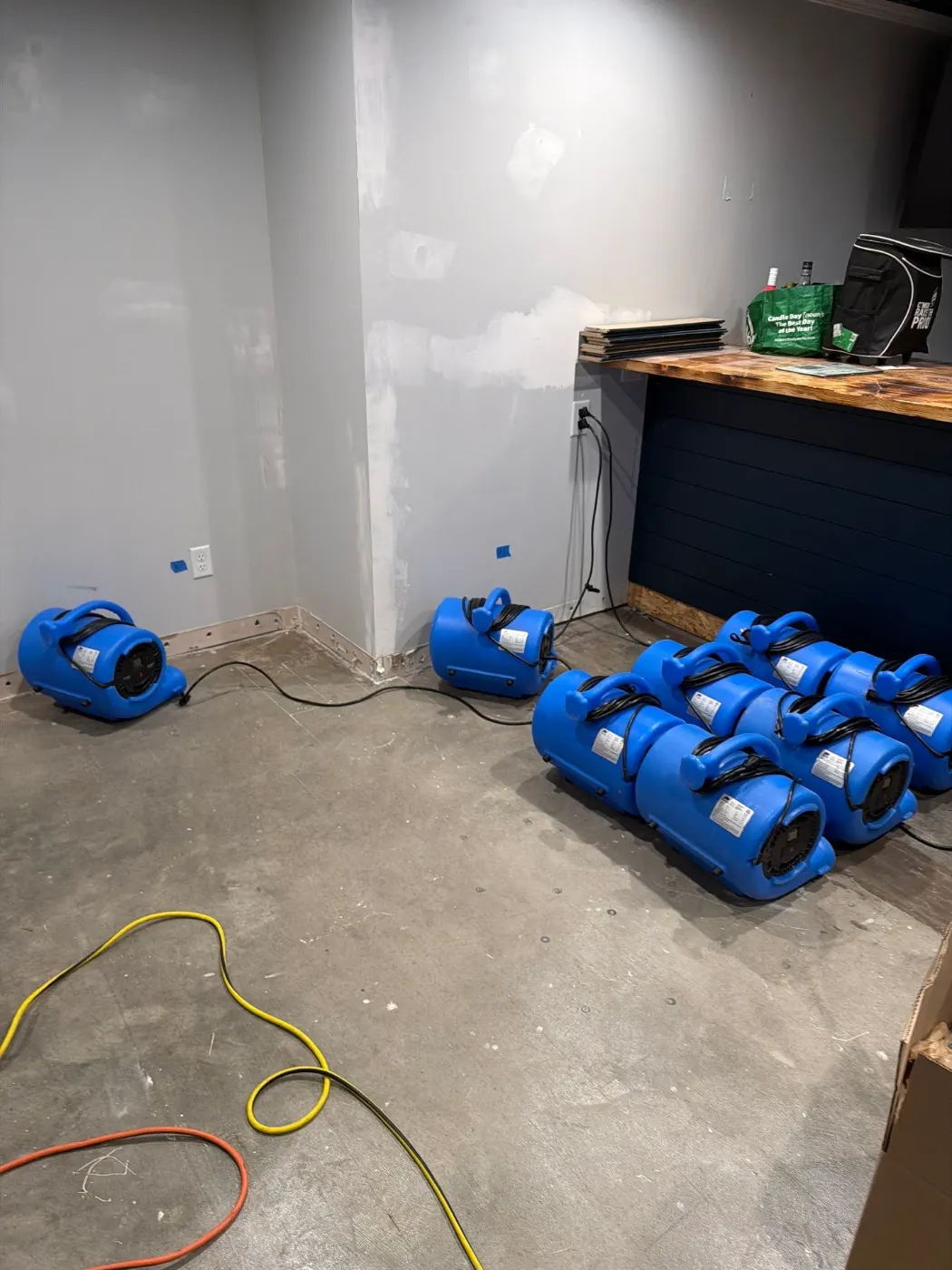
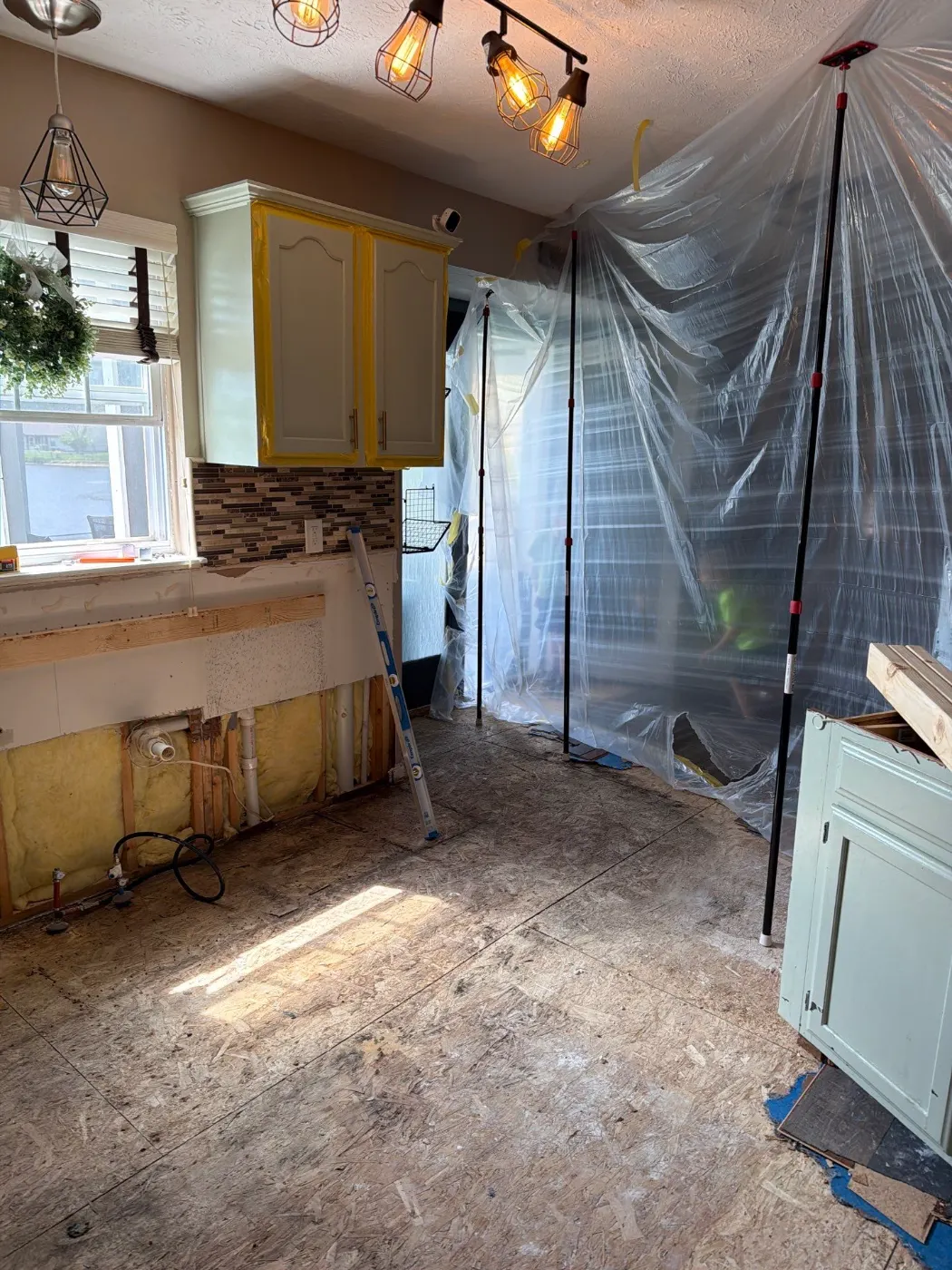
Photographs from real commercial mold remediation jobs completed by our crew in Jonesboro and surrounding areas.
Commercial Mold Remediation FAQ
Questions Jonesboro property managers ask us about commercial mold remediation.
Guidance and Standards for Commercial Mold Remediation
- The ANSI/IICRC S520 is the published standard for professional mold remediation. The current edition is the Fourth Edition, 2024. IICRC S520 Standard
- EPA’s mold guide says the key to mold control is moisture control. EPA: A Brief Guide to Mold, Moisture and Your Home
Jonesboro Neighborhoods We Serve
We take commercial mold remediation calls in every part of Jonesboro. Pick your neighborhood for local details.
Other Restoration Services in Jonesboro
Jonesboro Water Restoration handles the full scope of restoration work. Explore our other services below.
Water Damage Restoration in Jonesboro
24/7 emergency response. IICRC certified water restoration from extraction to full dry out.
Learn more →Basement Flooding in Jonesboro
Basement water emergencies handled fast. Extraction, drying, mold prevention.
Learn more →Sewage Cleanup in Jonesboro
Category 3 biohazard cleanup. Full containment, decontamination, structural restoration.
Learn more →Request Commercial Mold Remediation
Reach Us Directly
Our team is available 24/7 for emergencies and ready to schedule inspections during business hours.
Need Immediate Help?
For active water or mold emergencies, call us directly. We are available 24/7.